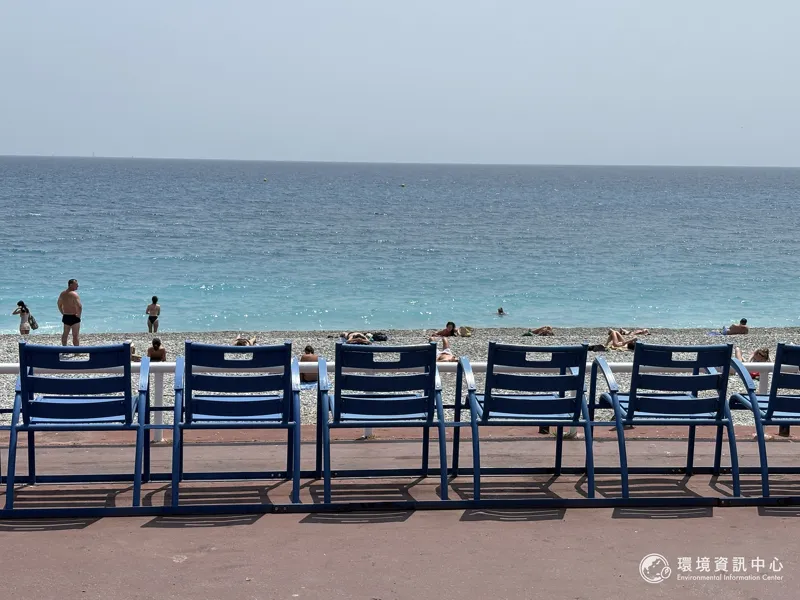
On June 8, 2025, prominent anti-whaling activist Paul Watson appeared at a side event of the UN Ocean Conference (UNOC3) in Nice, France; his brief two-and-a-half-minute address was met with thunderous applause.
Watson is a pioneer in marine conservation education who has never been intimidated by the forces that wantonly plunder ocean resources. He repeatedly confronted illegal whaling, shark fishing, and seal hunting head-on—using his own body to block vessels, ramming ships, and throwing stink bombs—solely to disrupt the operations of the whaling vessels. His bold and aggressive actions earned him the label of "eco-terrorist," yet they also awakened widespread public concern for the conservation of marine life. His story has been the subject of multiple documentaries, and he was named one of the environmental heroes of the twentieth century by Time Magazine—a pivotal figure in the history of global ocean conservation.
Due to his interference with a Japanese whaling vessel that occurred thirteen years earlier, he was arrested and spent five months in custody in Greenland last year; and Japan requested that Denmark extradite him to stand trial. Is it worth fighting for the ocean, paying the price of one's freedom, and facing the unknown suffering of imprisonment? The Environmental Information Center (環境資訊中心) interviewed Watson in Nice, listening as he recounted the belief he’s held for fifty years to change the world.

Viewing the Fjord and Whales from the Prison Cell
During the 2010s, Japan bypassed the international ban on whaling under the guise of "scientific research"; Watson and his team vehemently opposed this, leading to repeated, fierce clashes between the two sides. Last July, Watson was arrested after docking in Greenland while en route to intercept a Japanese whaling ship. A Greenland court at one point considered complying with Japan's extradition request, sparking international public outcry; a million people worldwide signed petitions demanding Watson's release.
Five months is the longest period Watson has ever been detained since he began protesting for the oceans, yet he takes it in stride. The cell features a large, unbarred window that opens to reveal magnificent views of the fjord and whales; the room is equipped with a shower, a refrigerator, and a TV; he receives a small allowance every Wednesday to buy food and daily necessities; and the prison even has a communal kitchen. Compared to other regions, Watson considers this "a relatively civilized prison."
"I know people who have spent time in Japanese prisons, and none of their experiences were pleasant. They drag you out for interrogation every day until you confess; if you don't confess, you can't go to trial—which is why Japan's conviction rate is as high as 99.9%."
His claims are not completely without foundation; a Human Rights Watch (人權觀察組織) report notes that Japan’s judicial system has long been characterized by the phenomenon of "hostage justice"—detention used to extract a confession. Watson added that organizations such as Amnesty International (國際特赦組織) have also condemned Japan's judicial system, remarking, "You wouldn't want to end up in a Japanese prison."
The sudden detention left Watson's family worried. "I've spent my whole life doing this - direct action. I have a forty-five-year-old daughter who used to work as a crew member with me.” Amidst the turbulent winds and rough waves outside, his family's support is his greatest backing.
In mid-December, 2025, seventy-four-year-old Watson was finally released and reunited with his family before Christmas. This might not be the last time Watson faces prison, because his efforts to protect the ocean won’t stop here.
At the side meetings of the 2025 Nice Ocean Conference, Watson pointed out that the loss of marine biodiversity is getting worse, and we must hold corporations accountable. But they won’t give in easily, especially oil companies. Crackdowns on environmental actions will only increase in the future. "They’ll use organizations like Interpol (國際刑警組織) to go after responsibility and label activists as criminals, so we need to be alert. Especially after U.S. President Donald Trump gave the green light for deep-sea mining, we need to step up and oppose it."
“I haven't hurt anyone in fifty years”
Watson holds dual citizenship in Canada and the United States. In the late '60s, he protested nuclear testing in Toronto and was an influential early member of Greenpeace. Later, he parted ways due to differences in approach and, in 1977, founded the Sea Shepherd Conservation Society (海洋守護者協會 [Sea Shepherd]), fighting illegal fishing at sea through “aggressive but non-violent” methods.
In September 2012, Interpol (國際刑警組織) issued a red notice for Watson at Japan's request. Japan accused Watson of breaking into a whaling ship in the Antarctic waters in 2010, interfering with fishing operations, and damaging property. The red notice, which Japan hadn't withdrawn for thirteen years, eventually led to Watson being handcuffed.
Whaling is a traditional part of Japanese culture, but Watson has been opposing it for years, and his relationship with the Japanese government has grown increasingly tense. From 2002 to 2017, the Sea Shepherd Conservation Society (海洋守護者協會 [Sea Shepherd]) launched eleven Antarctic whale protection campaigns, successfully saving over six thousand whales from death. In 2011, Watson even managed to force the Japanese whaling fleet to wrap up a month early, cutting their annual whaling quota by more than eight hundred whales.
The Institute of Cetacean Research, or the IRC (鯨類研究所), which is responsible for managing whaling affairs in Japan, has long detailed the “Sea Shepherd's Violent History.” It not only documents the group's protest actions but also includes statements from Watson, almost like an alternative report card.
The outside world once labeled Watson as an eco-terrorist. Besides Japan, Costa Rica also issued a red notice for him. Even though many people tried to convict him, they all failed in the end. Watson clarified that he is against criminal acts, saying, “I haven't hurt anyone in fifty years.”
Watson emphasized to the Environmental Information Center (環境資訊中心) that his actions have always been lawful. He cited the United Nations' World Charter for Nature to explain that the UN allows NGOs and individuals to get involved in enforcing international protection laws. This year's UN Ocean Conference successfully promoted more parties to ratify the High Seas Treaty, which will further strengthen the protection of high seas biodiversity and the rights of citizens to participate. Watson is happy to see it happen.
Overfishing is Making it Hard for the Ocean to Catch a Break
Watson grew up in an eastern Canadian fishing village and formed a connection with the sea from an early age, witnessing the decline of marine ecosystems. "The food that was once truly abundant is now scarce," he said. Back then, mussels growing by the docks were considered dirty and unwanted, but now they're a gourmet dish on the table. American traders thought the name of the Patagonian toothfish was unappealing, so they renamed it Chilean sea bass to suit the market. "But it's not really from Chile, nor is it a bass, but people like the name."
He talked about Norway's huge fleet fishing along the coast of India, plundering everything, and how fleets from countries all over the world are emptying the oceans. “The Chinese squid fleet uses strong lights to attract squid in the waters south of the Galapagos Islands. From satellite images, it looks like a bright city on the sea.” Industrial fishing has caused continuous overfishing, and Watson pointed out that it’s closely linked to massive subsidies from various governments. Besides meeting consumer demand, there’s political pressure from the fishing industry, and even corruption involving officials and businesses.
He observed that the fishing industry is a really powerful lobbying group. Many years ago, in Ecuador's Galapagos Islands, local sea cucumbers had reached their harvesting limit, so the government issued a ban. This led to fishermen rioting, smashing government offices, and threatening to kill the tortoises. “Later, the government gave them everything they wanted.”
The Ocean Guardians Association (海洋守護者協會) once pulled a seventy-two-kilometer-long, seventy-ton fishing net out of the Southern Ocean. “We spent two hundred hours, pulling and pulling,” they said. And that was just one net from a single fishing boat. At any given time, there are over ninety-six thousand kilometers of fishing lines and nets in the ocean—enough to wrap around the Earth several times.
As early as ten years ago, Watson suggested that industrial fishing should be banned for fifty years to give the oceans a chance to recover. “I often say the solution is to do nothing and let it recover naturally.” But fishermen and businesses didn’t listen.
He went on to say that Japan's Mitsubishi freezer warehouses have huge stocks of bluefin tuna, but merchants are not satisfied. “If the number of bluefin tuna goes down, the price of the stock in the warehouse can go up. If the wild bluefin tuna go extinct, the ones in the warehouse would be priceless. I call this “the economics of extinction.” The documentary “The End of the Line” also makes similar accusations.
Watson once asked Alaskan fishermen why they didn't protect fishery resources for future generations. They replied that their mortgage would be paid off in five years, and beyond that, they didn't care at all. “Why would people like that have kids?” Watson said calmly, though his words couldn't hide his frustration. “Ultimately, this is the problem: human ignorance and unbelievable arrogance. I call it a kind of collective psychological disorder, a form of human centrism.”
Change is Slow, You Need Patience
A few years ago, Watson once said that trees, bees, insects, fish, and whales are more important than humans, which sparked public doubt. But he believes, “They can survive without us, but without them, we can't live on this planet.” Changing the way humans think about our relationship with the ocean and wildlife is a huge task. Watson thinks that his direct actions, being arrested, and detained are all part of this environmental movement.
People might find it hard to imagine that someone would go to court or even lose their freedom to protect the environment, but Watson believes it's all a choice. Many social activists in history have faced jail time, including Mandela and Gandhi.
While countries around the world talk about the future of the oceans at conference tables, this environmental warrior, who has been committed to ocean conservation for nearly half a century, always chooses to be on the front lines. He emphasizes, “The power of an ecosystem lies in its diversity, and the power of a movement also lies in its diversity. You can choose education, litigation, legislation, or social activism. If you become an activist, you have to expect that you might get arrested. There’s no reason to be surprised by that.”
Watson believes that change takes time, just like how slavery in the U.S. didn't end overnight; American women also fought for the right to vote for over a century. “Social change comes slowly, you have to be patient. This won't happen overnight.”
"You need to be patient," he kept saying.
Translated by Joey Adams; Proofread by Vita Liu (劉祐君).
*Note: This article has been translated between Chinese and English. Proper names and pinyin spellings are provided for reference only.